




Filter by Brand
 CARELCAREL 10
 ENGINIAENGINIA 10
 FRALFRAL 12
 GTIGTI 4
 sanuvoxsanuvox 4
 SAUERMANNSAUERMANN 116
 SENVASENVA 31
 TSITSI 5

IAQ probes For class 320 transmitters
Ref:
Si-PRO-CO2, Si-PRO-CO, Si-PRO-VOC
Si-PRO-CO2: CO2 probe. Main applications: CO2 monitoring (IAQ) in VAC systems of office buildings, commercial buildings, education facilities.
Si-PRO-CO: CO probe. Main applications: CO monitoring in parking lots, boiler rooms and in industrial environments.
Si-PRO-VOC: VOC probe. Main applications: VOC monitoring (IAQ) in VAC systems of office buildings, commercial buildings, education facilities, Control of TVOC in pharmaceutical industries.
Plastic body, Ø 29.5 mm, length: 175 mm.
Si-ACC-R2 probe cable connection to class 320 transmitters is needed.
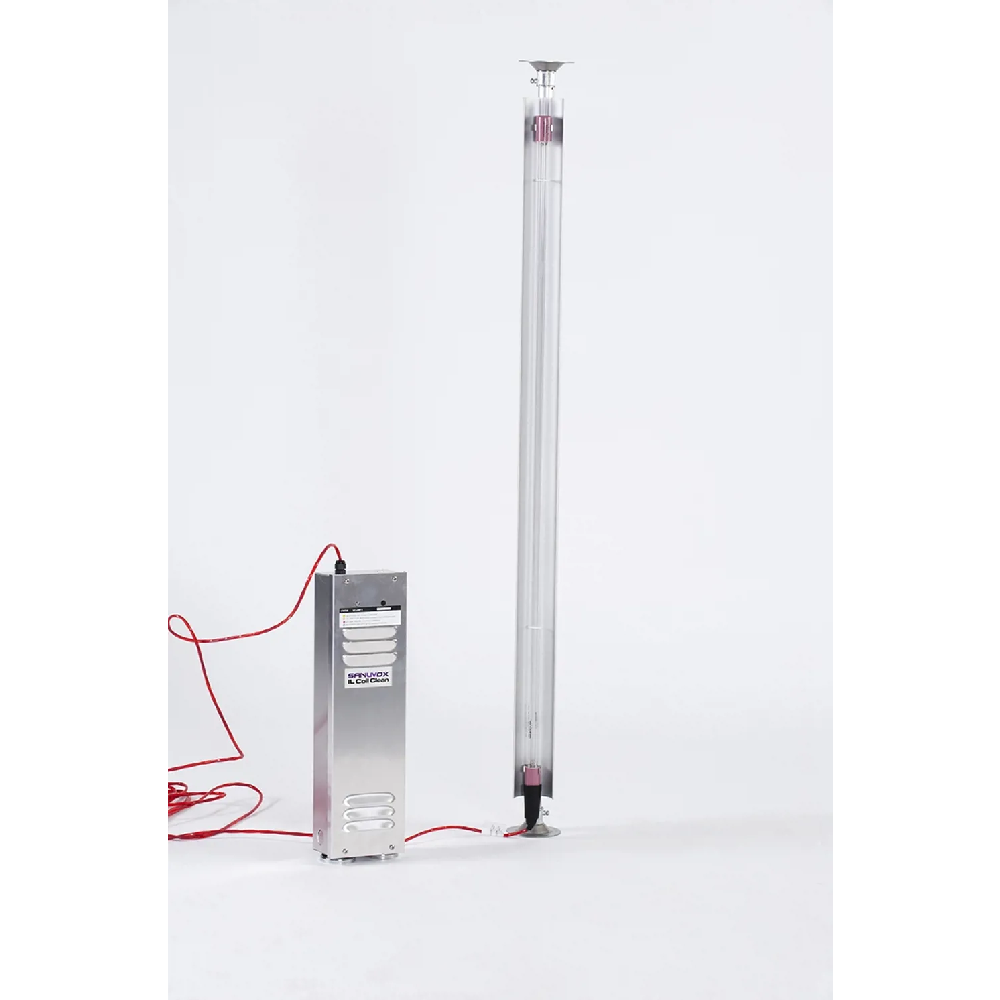
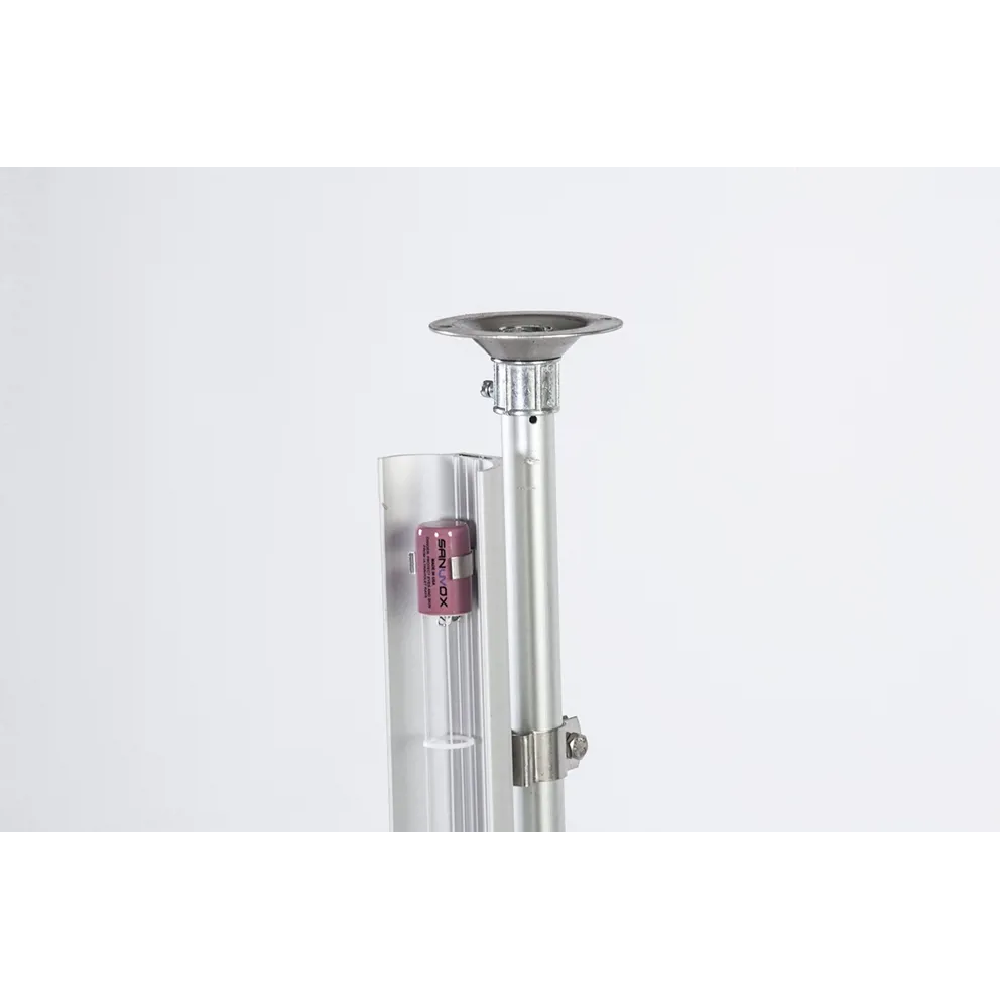
IL Coil Clean
The IL Coil Clean keeps prevent growth of biofilms and mold evaporator coils. It is ideal for any building equipped with an HVAC system. The IL Coil Clean can be installed on either side of the evaporator coils.
Using patented and versatile technology, the IL Coil Clean uses high-intensity UV lamps combined with aluminum parabolic reflectors, so that all the UV energy produced is concentrated on the surface of the evaporator coils.
The modules containing the ballasts are equipped with LED indicating the status of the lamps to facilitate maintenance.Dry contacts are also included for remote monitoring BMS systems.
The IL Coil Clean requires little maintenance; it is recommended to simply change the UV lamps after 17,000 hours of use.

Immersed electrode humidifiers
This product is available in CAREL CPQ, the sizing and selection tool that lets you independently find the right CAREL solutions for you, download the related documentation, receive support, and generate quotes and orders.
The operation of immersed electrode humidifiers is based on a very simple physical principle. As common drinking water contains a certain quantity of dissolved mineral salts, and is consequently slightly conductive, applying a voltage to metal electrodes immersed in the water creates an electric current that heats the water (Joule effect) until boiling, thus producing steam.
The quantity of steam produced is proportional to the electric current, which is in turn proportional to the water level.
This electric current is measured by a current transformer: by varying the level of water using a fill solenoid valve and due to the evaporation process, the current, and consequently steam production, can be modulated. Due to evaporation, the level of water decreases and must therefore be topped up. As the steam produced does not carry mineral salts, the salt concentration in the water and therefore the conductivity increases, and has to be periodically diluted by draining part of it using the drain pump and replacing it with new water.
In addition, scale forms over time and covers part of the cylinder, which must be replaced or cleaned. The principle is simple, however the development of an immersed electrode humidifier that ensures safe operation and reliability over time requires careful analysis and extended testing.
Compared to electric heater or gas-fired humidifiers, immersed electrode humidifiers:
are less expensive to purchase;
operate with drinking water (not completely demineralised or softened);
require periodical replacement (or cleaning) of the cylinder;
feature modulation suitable for comfort or industrial applications, without extreme requirements.
CAREL has been manufacturing immersed electrode humidifiers since the 1970s and can draw benefit from its know-how in the field of electronic controllers: precision control, reliable electronics and sophisticated and complete control software.
The CAREL solutions for immersed electrode humidifiers are humiSteam and compactSteam.

Impermeability special manometer for gas network MP 130
Made specifically for use in gas network testing, the Kimo MP 130 is an essential instrument for gas professionals.

Infrared remote printer KIMP-23
For class 210 / 310 portable instruments
Kimo’s infra-red printer for portable instruments allows to print measurements.


IoTBuddy
Higher Reliability, Faster Installation, Superior Accuracy | Sense the Difference
Connects analog or Modbus RTU devices to cloud services, while still allowing BACnet/IP or Modbus/TCP connections for the same points.
Facilitates power over Ethernet (POE), Ethernet, or Wireless 2.4 GHz.
Small design to allow for installation in sensor housing or junction box.
Easy configuration via NFC or the IoTBuddy Hosted Web page.

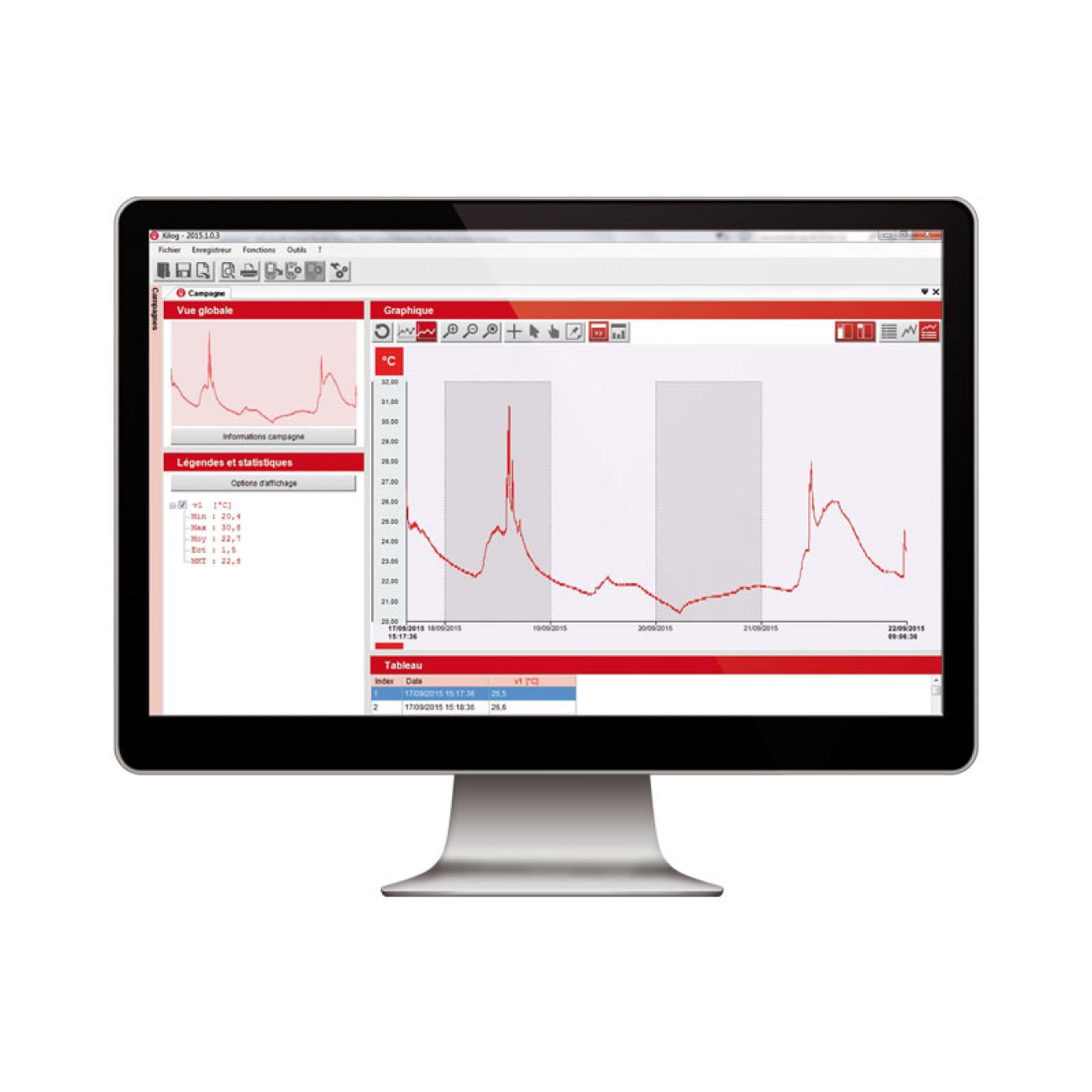
KILOG
Data processing software for Kistock data loggers
Ref:
KILOG
Operating systems
Windows 10
Windows 8
Windows 7
Windows Vista
Windows XP SP2/SP3
Kimo’s KILOG software helps configure, download and process data from Kistock.

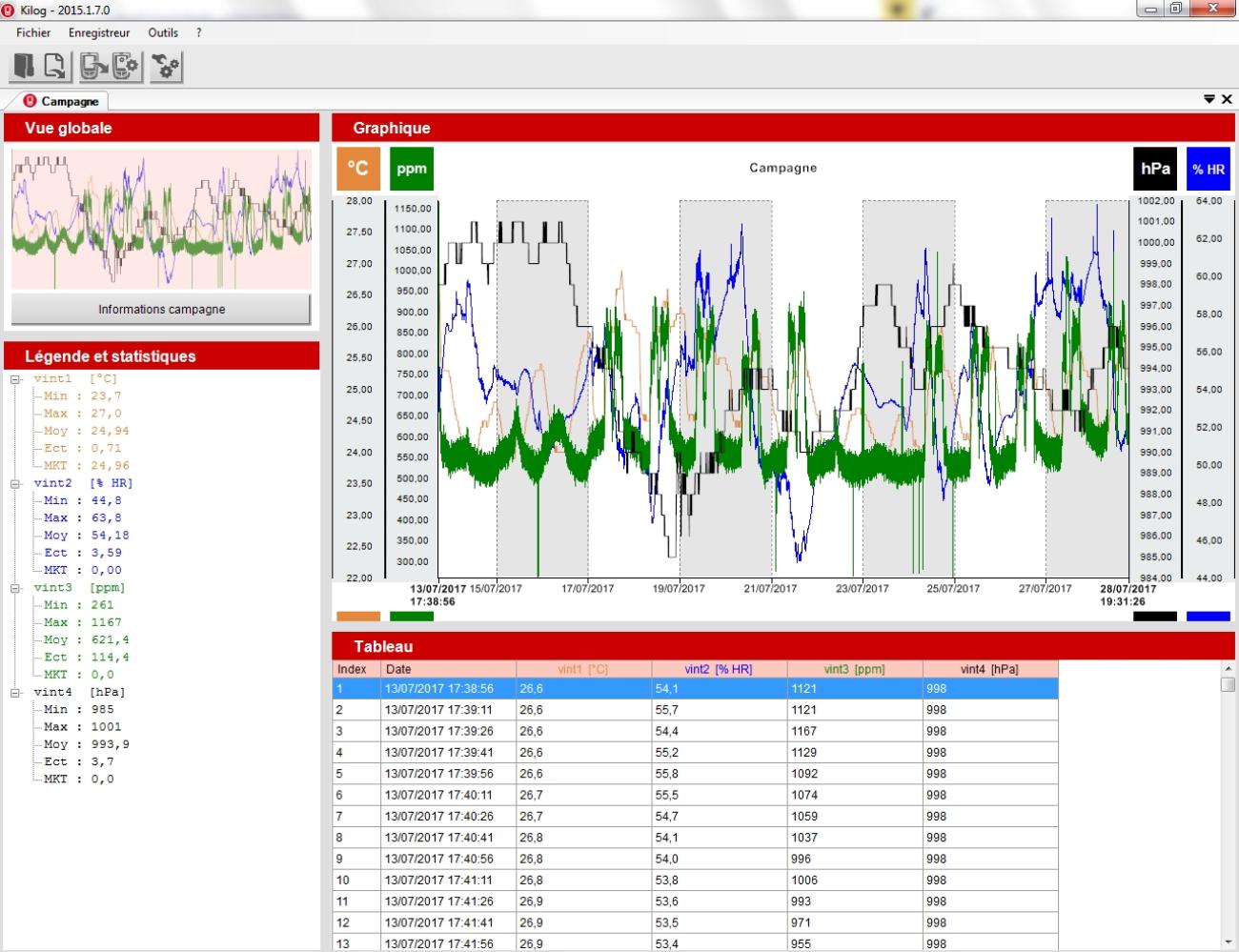
KILOG-Lite
Ref:
KILOG-Lite
Operating systems
Windows 10
Windows 8
Windows 7
Windows Vista
Windows XP SP2/SP3
Kimo’s KILOG-Lite software allows users to configure Kistock data loggers.

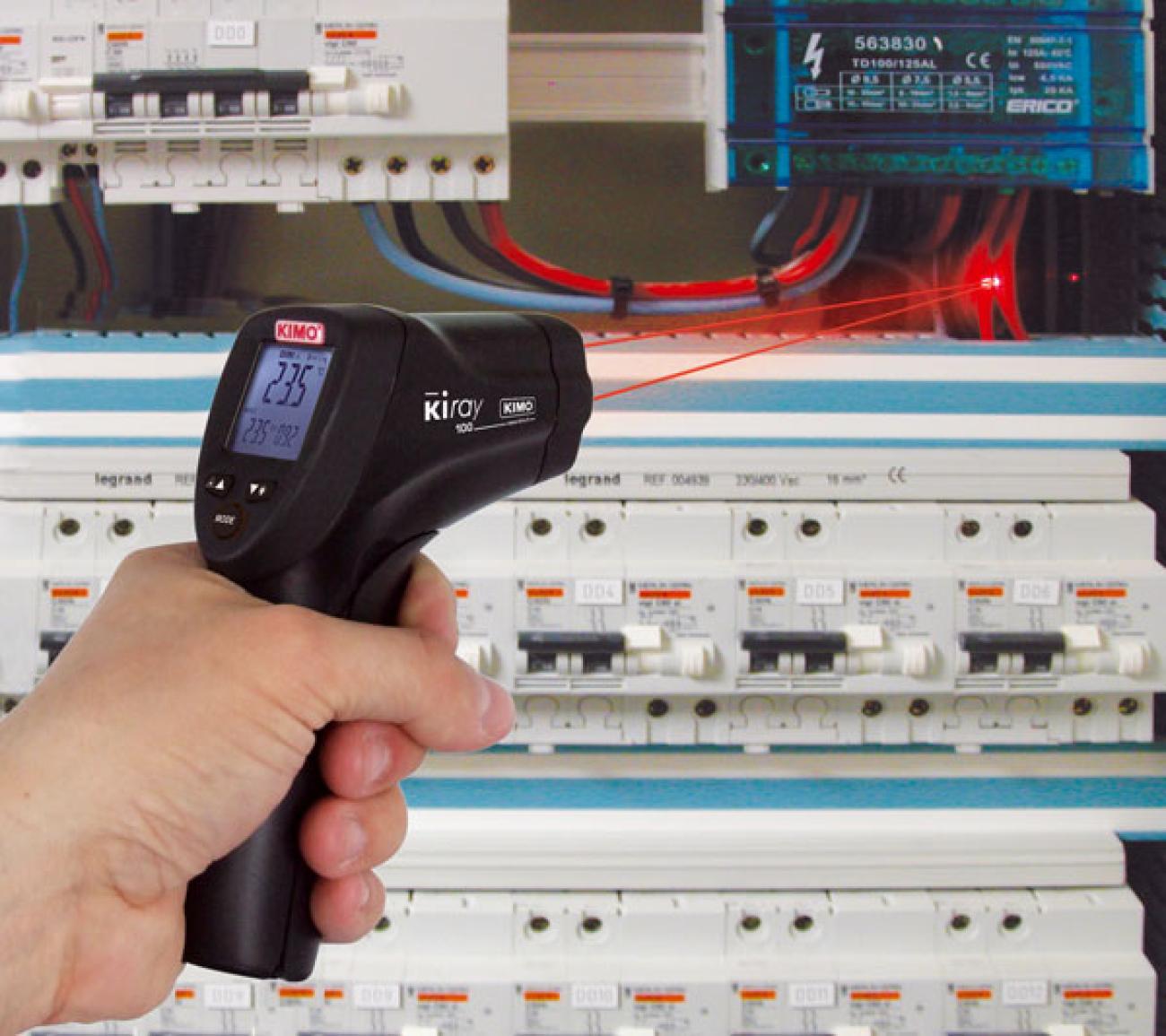
KIRAY 100 Infrared thermometer
The Kimo KIRAY 100 infrared thermometer with a dual laser sighting is a key instrument to diagnose, inspect and check any temperature, with the advantage of using “no-contact” technology. It has a range from -50 to +800 °C.
An infrared thermometer measures surface temperatures of hot objects that are dangerous or difficult to access.


KIRAY 200 Infrared thermometer
The Kimo KIRAY 200 infrared thermometer with a dual laser sighting is a key instrument to diagnose, inspect and check any temperature, with the advantage of using “no-contact” technology. It has a range from -50 to +850 °C.
An infrared thermometer measures surface temperatures of hot objects that are dangerous or difficult to access.


KIRAY 300 Infrared thermometer
The Kimo KIRAY 300 infrared thermometer with a dual laser sighting is a key instrument to diagnose, inspect and check any temperature, with the advantage of using “no-contact” technology. It has a measuring range of -50 °C to +1850 °C.
An infrared thermometer measures surface temperatures of hot objects that are dangerous or difficult to access.


KIRAY 50 Infrared thermometer
The Kimo KIRAY 50 infrared thermometer with a dual laser sighting is a key instrument to diagnose, inspect and check any temperature, with the advantage of using “no-contact” technology. It has a measuring range of -50 to +380°C.


 Humidification
 Dehumidification
 HVAC Measuring instruments
 HVAC Sensors & Field Devices
 Air Particles Counting
 Microbial Air Sampler